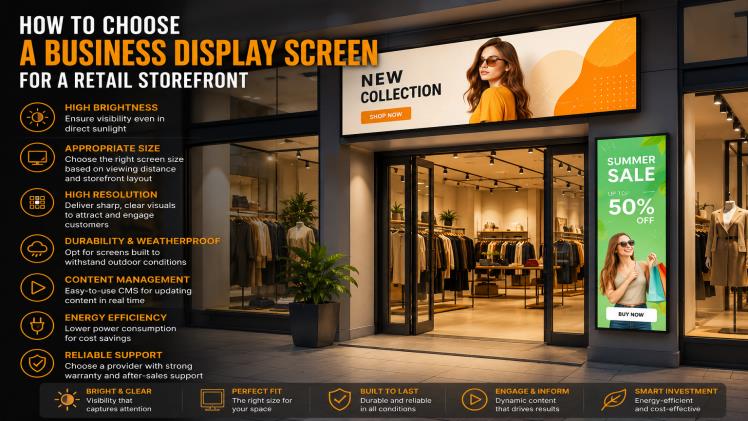
 A retail storefront has only a few seconds to catch attention. People walk by while checking phones, talking, carrying bags, or moving toward another destination. A business display screen can help a store stand out, but only if it is chosen for the real storefront environment.
The best retail screen is not simply the biggest or brightest option. It should fit the window, match the viewing distance, handle daylight, and make the brand message easy to understand at a glance.
Start With the Storefront Conditions
Window-facing displays deal with reflections, sunlight, glass glare, and changing daylight. Brightness is important because a screen that looks vivid indoors may appear weak from the sidewalk. Brightness is usually measured in nits, and storefront screens often need higher brightness than screens used deep inside a store.
Placement also matters. A screen placed too high may be missed by pedestrians. A screen placed too close to glass may suffer from reflections. Before choosing a display, review the walking path, window angle, sunlight direction, and typical viewing distance.
Choose the Right Size and Resolution
A large screen can create impact, but size should support the message. If the screen mainly shows promotions, brand visuals, or seasonal campaigns, a larger format can work well. If it shows product details, prices, or QR codes, resolution and readability become more important.
For LED displays, pixel pitch affects how clean the image looks up close. A smaller pixel pitch is better for near viewing, while a larger pitch can work when viewers stand farther away. Retailers should avoid paying for unnecessary detail if the audience cannot see it from the sidewalk.
Content Should Be Simple
A storefront display is not a brochure. It needs short messages, strong visuals, and clear contrast. Motion can attract attention, but too much movement can make the screen hard to read. Product images, limited-time offers, brand films, and simple directional prompts usually perform better than crowded layouts.
According to Digital Signage Federation discussions across the industry, content strategy is often as important as hardware. A sharp screen cannot fix confusing creative. A clear campaign on a well-placed display can influence foot traffic more effectively.
Plan for Service and Updates
Retail teams need displays that are easy to maintain and update. Storefront screens may run for long hours, so reliability and service access matter. If the screen is part of a chain rollout, remote content management may also be important.
Businesses comparing retail display solutions should think about visibility, content, installation, and maintenance together. A strong storefront display does not just look good on opening day. It keeps supporting promotions, seasonal campaigns, and brand presence over time.